
Manufacturing
Manufacturing capabilities
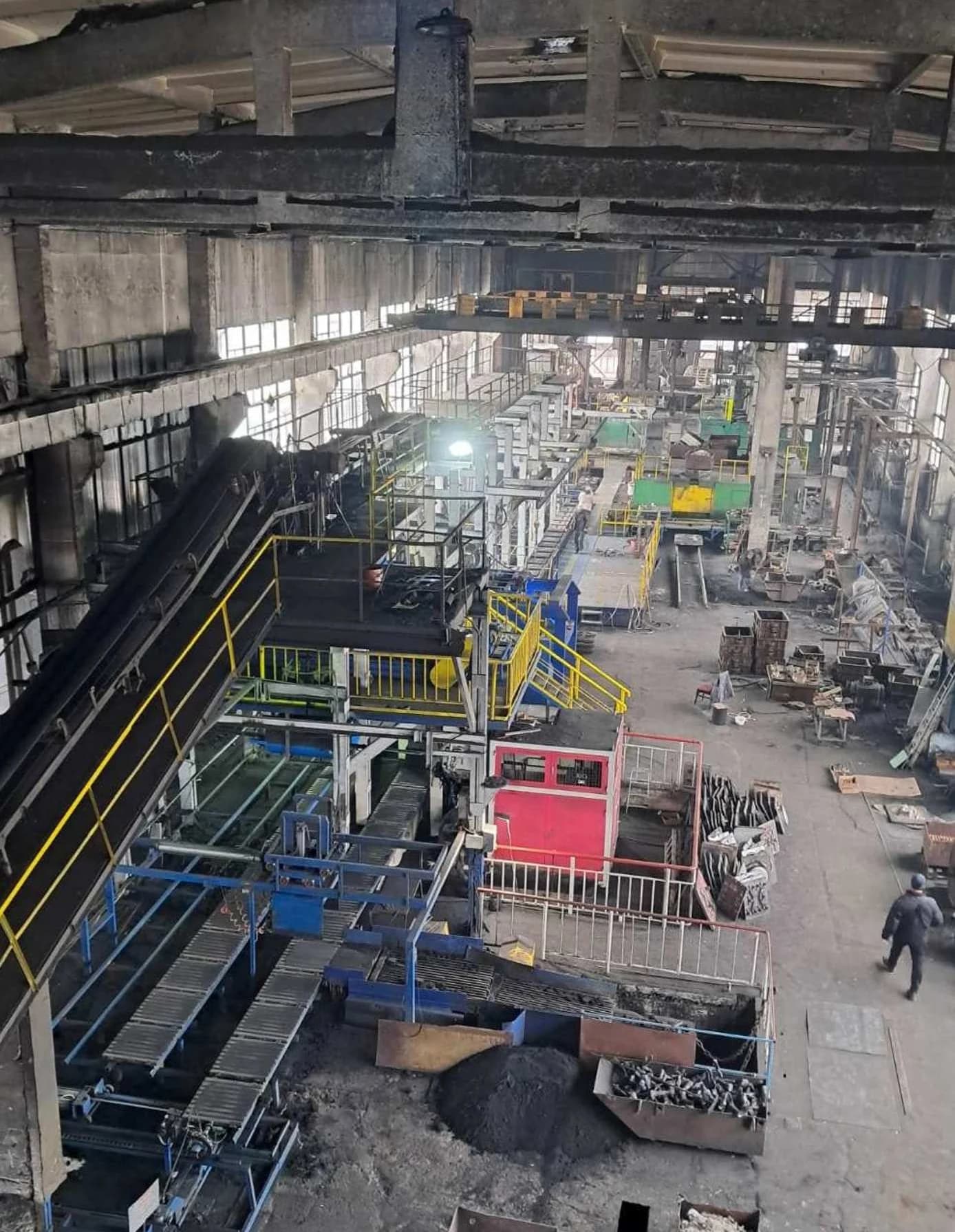
A foundry with an automated moulding line, its own core shop, machine shop and testing laboratory — all on one site in Vidin.
01Capabilities
Technical data
A summary of the production parameters at the plant. Iron grade and casting weight are agreed against the documentation for the particular part.
- Moulding process
- Green sand
- Materials
- Grey and ductile iron
- Grades
- To customer documentation
- Mould format
- 600 × 600 × 200+270 mm
- Moulding rate
- 70 moulds/h
- Moulding line
- 3 wings, 150 trolleys
- Sand preparation
- 14 t/h
- Melting units
- 2 × 2 600 kg · 1 × 700 kg
- Induction melting
- 50 Hz · 1000 Hz
- Cores
- Hot box · cold box (Croning)
- Fettling
- Shot blasting, 3 × 400 kg
- Machining centre, X/Y/Z travel
- 1200 × 600 × 600 mm
- Boring machine, working range
- 1000 × 1000 × 800 mm
- Inspection
- Spectral · metallographic · ultrasonic · Brinell
- Quality system
- ISO 9001
The figures describe the equipment in service. For a specific part, send a drawing — we will confirm feasibility and the scope of machining.
02Capabilities
Production process
Seven stages, each carried out in the plant. The scope of a given order is agreed in advance, from as-cast supply through to a fully machined part.
- 01
Process engineering
Design and process documentation is prepared — part configuration, gating system and pattern equipment. This is where both the casting method and the cost of the part are settled.
- 02
Pattern equipment
New pattern and core equipment is manufactured, existing equipment maintained and updated, and the flask fleet repaired — worked directly from the specification or technical documentation supplied by the customer.
- 03
Core making
Core requirements follow from the design documentation. Cores are produced on machines in our own core shop, with both hot box and cold box processes available.
- 04
Moulding and pouring
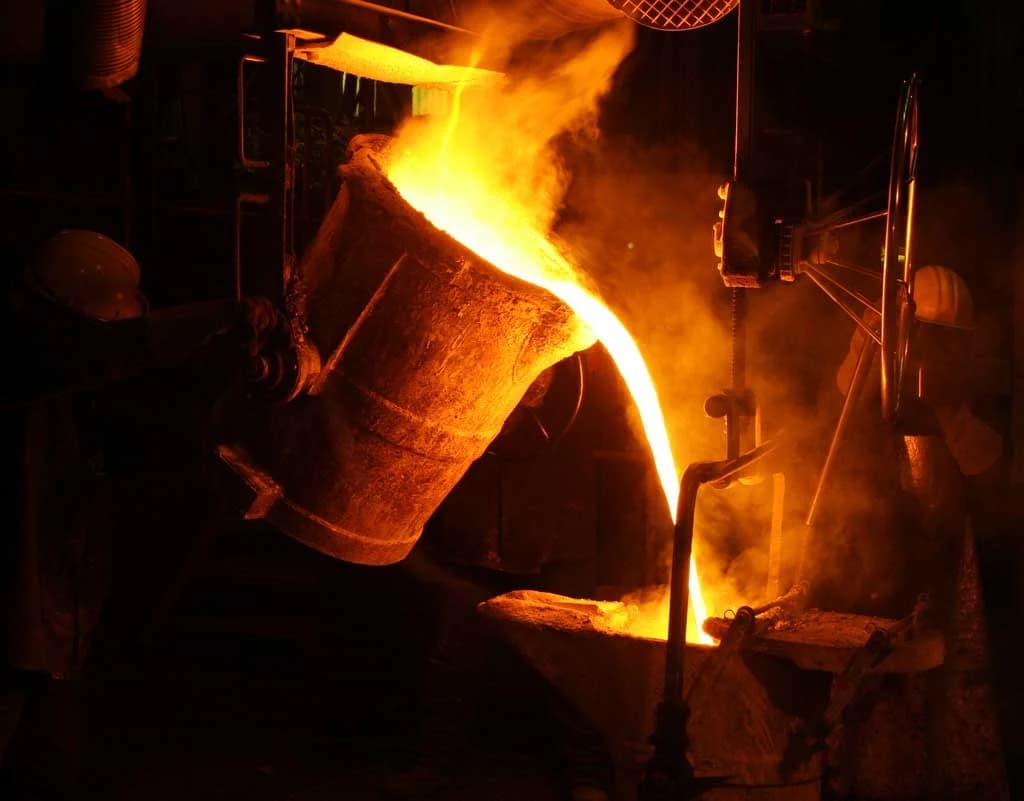
Moulding runs alongside automated sand preparation, with parameters set in software according to the casting. Pouring runs in parallel with moulding, and the liquid metal is checked for temperature and chemical composition before and during the pour.
- 05
Fettling
Castings are cleaned and finished in the cleaning shop by shot blasting and with pneumatic grinders.
- 06
Machining
Machining requested by the customer is carried out to agreed technical documentation. Every dimension on a machined part is fully inspected.
- 07
Inspection and dispatch
Finished parts are verified by metallographic and spectral analysis, physical and mechanical testing, and non-destructive ultrasonic inspection.
03Capabilities
Equipment by department
The installations below are in service at the plant. Figures are taken from the production equipment schedule.
Melting
Induction melting of iron.
- Induction furnaces, 50 Hz — 2 units, 2,600 kg each
- Induction furnace, 1000 Hz — 1 unit, 700 kg
Foundry
Automated moulding and pouring.
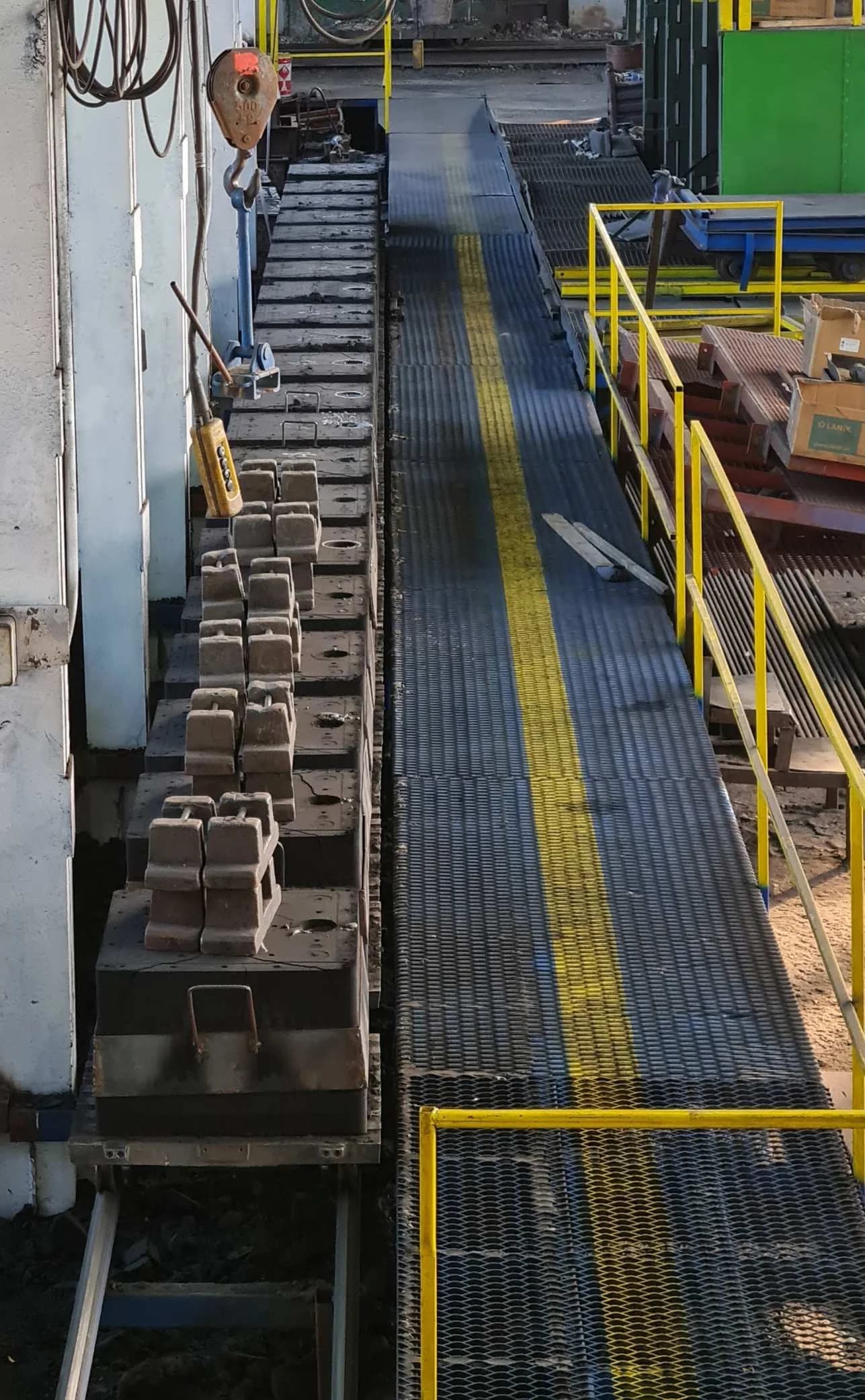
- Automatic flaskless moulding machine, format 600 × 600 × 200+270 mm, 70 moulds per hour
- Automated moulding and pouring line — three wings with 150 trolleys
- Automated sand preparation with mixer — 14 t/h
- Screw compressors — 55 kW and 30 kW
- Belt conveyors for new and used sand, rail tracks, hydraulic stations, extraction system
Core shop
Machine core making by the Croning process, with hot box and cold box available.
- ROPERWERK core machines — 2 × 16 l and 1 × 16.5 l, hot box
Machining and pattern shop
Fettling, machining and tooling manufacture.
- Cleaning machines — 3 units, 400 kg each
- Kitamura machining centre, X/Y/Z travel 1200 / 600 / 600 mm
- Boring machine, working range 1000 / 1000 / 800 mm
- Universal lathes — 2 units
- Universal milling machine — 1 unit
Laboratory
Express analysis of liquid metal and inspection of finished products.
- Spectrometer for express analysis
- Ferrolab express analysis device
04Capabilities
What we need from you
The more complete the documentation at the start, the fewer questions arise later in production.
- A design drawing of the part, or a 3D model
- Material — grey or ductile iron, with the grade required
- Quantity and expected delivery frequency
- Scope of supply — as-cast or machined
- Inspection requirements and documentation to accompany delivery
If your documentation is not final, process engineering is part of our work — part configuration, gating system and pattern equipment are settled together with you.
Send a drawing and you will get a straight answer
Tell us the part, the material and the quantity. If you have design documentation, attach it — the answer will be that much more specific.
- Telephone
- +359 94 600 716
- lit_ltd@mail.bg